
Exploring the Depths: A Guide to Our Oceans
Intro
The oceans are the lifeblood of our planet, covering over 70% of the Earth's surface. But they are much more than just vast, blue expanses stretching to the horizon. Beneath the surface lies a world of wonder, an intricate tapestry of life and ecosystems that is vital for the health of our environment and humanity. From the smallest plankton to the magnificence of the blue whale, every creature plays a role in maintaining balance within the marine ecosystem.
In addition to their ecological significance, oceans are playgrounds for water sports enthusiasts, offering a myriad of activities such as surfing, sailing, and snorkeling. The thrill of riding a wave, the serenity of sailing into the sunset, or the excitement of exploring underwater life are experiences that not only connect us with nature but also highlight the urgent need for conservation.
This guide aims to dive deep into the aspects of oceanic exploration, revealing the richness of marine environments while emphasizing the challenges they face today, including pollution, climate change, and overfishing. As we embark on this journey, it becomes crucial to foster a deeper appreciation for these incredible bodies of water and to promote sustainable practices that protect them for generations to come.
Understanding Oceanic Science
Oceanic science serves as the foundation for grasping the complexities of our planet's lifeblood: the oceans. Their vastness is not just a magnificent spectacle; it plays an essential role in regulating climate, providing countless resources, and supporting a myriad of life forms. By understanding oceanic science, we gain insights into how these giant water bodies function, how they interact with the atmosphere, and what challenges they face due to human activities and natural phenomena. It is crucial for anyone keen on water sports or marine adventures, as these insights can enhance not only safety but also enjoyment on the water.
The Composition of Oceans
Salinity and Temperature Variations
Salinity and temperature variations are key players in defining the ocean's character. Salinity, measuring the concentration of dissolved salts, varies dramatically from one region to another. You might find that coastal waters can have different salinities compared to the open ocean, influenced by factors such as river inflows, evaporation rates, and ocean currents. Temperature varies, too, making some areas warm and inviting while others are dark and frigid. When exploring the ocean, understanding these variations helps predict weather patterns and marine behaviors.
- Key characteristic: These variations create distinct zones that can support different types of marine life, from sun-drenched tropical fish to ghostly anglerfish lurking in the depths.
- Advantage in article: Addressing this topic allows readers to appreciate why certain species thrive in specific regions and how climate change might jeopardize those delicate balances.
Chemical Composition of Seawater
The chemical composition of seawater is, without a doubt, a( vital aspect of oceanic science. Predominantly made up of water, it includes a cocktail of salts, gases, and organic matter. The right mix of elements, like sodium, magnesium, and potassium, supports everything from plankton to whales. This rich brew is what sustains marine ecosystems.
- Unique feature: The presence of nutrients, which are critical for photosynthesis, illustrates interconnectedness in marine life.
- Benefits and drawbacks: While understanding seawater chemistry is popular among marine biologists, it also serves as a reminder of how pollution can drastically alter this balance, affecting multiple species.
Major Ocean Basins
The Earth's oceans are divided into several major basins: the Pacific, Atlantic, Indian, Southern, and Arctic. Each basin holds its own unique story. For instance, the Pacific Ocean is the largest and deepest, home to numerous islands and underwater features. These basins don’t just house vast bodies of water, they represent different ecological systems and cultures interconnected through their waters.
- Key characteristic: Each basin interacts with others through currents, affecting global weather patterns.
- Importance for readers: Recognizing these basins provides context for climatic data and conservation efforts, emphasizing the global importance of maintaining ocean health for all.
Oceanic Layers and Their Functions
Epipelagic Zone
The epipelagic zone, often referred to as the sunlight zone, is where most marine activities occur. It reaches depths of about 0 to 200 meters and is crucial for photosynthesis, host to numerous species including fish, whales, and sharks. The clarity of sunlight penetrating this zone allows for vibrant ecosystems to flourish.
- Key feature: The presence of sunlight facilitates photosynthetic life, forming the basis of the marine food web.
- Contribution to the article: Understanding this layer highlights the importance of marine biodiversity and the threats they face, from overfishing to climate change.
Mesopelagic Zone
Beneath the epipelagic zone lies the mesopelagic zone, extending from 200 to 1000 meters. This twilight zone exhibits unique conditions where light diminishes, affecting life forms that dwell here. Creatures like lanternfish are adapted to these low-light environments, showcasing fascinating bioluminescent abilities.
- Key characteristic: It serves as a transition zone between the sunlit surface and the dark depths, playing a pivotal role in oceanic circulation and nutrient distribution.
- Advantage: Easy access to the mesopelagic layer might unveil novel species and ecological interactions, vital for resource management and conservation solutions.
Bathypelagic Zone
The bathypelagic zone, located between 1000 and 4000 meters deep, is often a dark and cold world. Here, the pressure is immense, and life adapts in remarkable ways. Creatures in this zone are often bioluminescent and exhibit unique behaviors designed to survive in extreme environments.
- Unique feature: The adaptations found here are critical for understanding evolutionary biology and the resilience of life under extreme pressure.
- Impact on readers: Grasping the characteristics of these deeper layers broadens the perspective of ocean life and showcases the importance of protecting these hidden ecosystems.
Ocean Currents Dynamics
The Role of Solar Energy
Solar energy drives ocean currents, influencing weather patterns across the globe. As the sun heats water, it causes variations in temperature and density, leading to the movement of warm, less dense water and cold, denser water.
- Key characteristic: This heat exchange is fundamental to understanding phenomena such as El Niño and La Niña, which have far-reaching implications on global climates.
- Importance: By examining solar energy's role, readers can appreciate how interconnected our climate and ocean health are, highlighting the need for sustainable practices.
Thermohaline Circulation
Thermohaline circulation relates to the movement of salt and temperature gradients throughout the oceans. This large-scale current system is essential for nutrient mixing and regulating climates in various regions.
- Key feature: It acts like a conveyor belt, transporting warm water to the poles and cold water toward the equator.
- Benefit: Understanding this circulation helps grasp how changes in temperature and salinity could disrupt weather patterns globally, a topic increasingly relevant in our climate crisis.
Effect on Global Climate
The relationship between ocean currents and climate cannot be overstated. Currents help distribute heat, carbon, and nutrients across the planet, playing a vital role in everything from ocean health to the agricultural seasons of various regions.
- Key characteristic: Changes in ocean currents can lead to shifts in weather patterns and marine ecosystems.
- Advantages for readers: By comprehending this dynamic, readers can advocate for policies that better protect our oceans, acknowledging them as key players in global climate regulations.
Marine Biodiversity and Ecosystem Services
Understanding marine biodiversity is crucial, as it plays an integral role in maintaining the overall health of our oceans and, by extension, our planet. The complex interactions among various species create ecosystems that provide essential services to human populations and the environment alike. Coral reefs, mangroves, and wetlands are not just beautiful; they are hubs of life that support a wealth of species, many of which remain undiscovered. The benefits these ecosystems offer range from food production and carbon sequestration to natural barriers against climate change effects.
Significance of Coral Reefs
Coral Reef Ecosystems
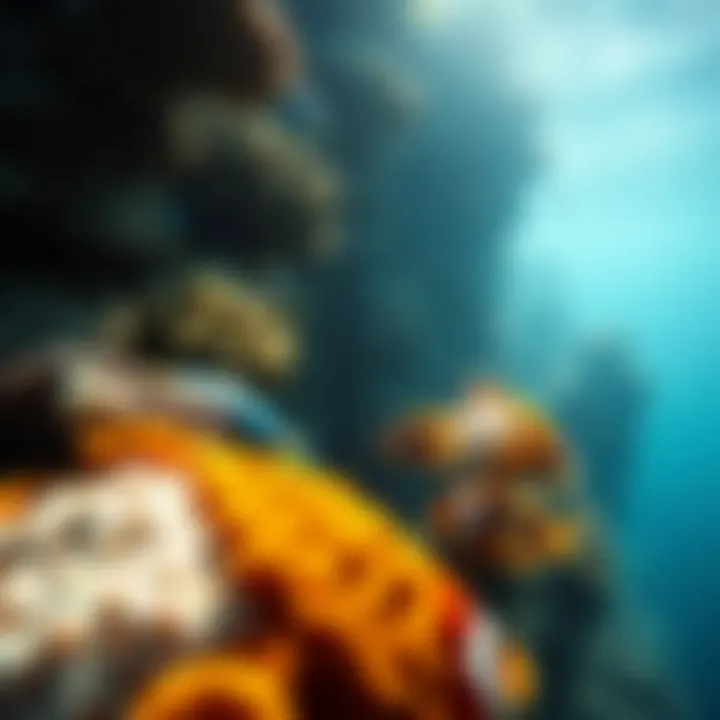
Coral reefs are often called the "rainforests of the sea" due to their incredible diversity. These ecosystems cover less than 1% of the ocean floor, yet they provide habitat for more than 25% of all marine species. This vast diversity exists due to the intricate relationships formed between corals, algae, and other marine life. One unique feature of coral reefs is their ability to form symbiotic relationships with zooxanthellae, microscopic algae that live within coral tissues. This relationship not only provides the coral with energy through photosynthesis but also gives reefs their vibrant colors.
The ecological and economic importance of coral reefs cannot be overstated. They provide coastal protection, support fisheries, and offer recreational opportunities. However, they are incredibly sensitive to environmental changes, making them susceptible to bleaching and degradation.
Threats to Coral Reefs
The main threats to coral reefs stem from human activities, such as climate change, overfishing, and pollution. Rising water temperatures lead to coral bleaching, where corals expel their symbiotic algae, resulting in a significant loss of color and vitality. Furthermore, coastal development destroys crucial habitats, while pollution from agriculture and urban runoff introduces harmful substances that inhibit reef growth.
These threats create a complex challenge for coral reef conservation. As many coastal communities depend on these reefs for their livelihoods, addressing the threats requires a collective effort. Raising awareness about these threats is vital in fostering sustainable practices that can safeguard these fragile systems.
Conservation Efforts
Conservation efforts are gaining ground as communities, governments, and organizations recognize the urgency of preserving coral reefs. Initiatives such as marine protected areas (MPAs) are being implemented to reduce human impact and promote recovery. Local and international collaboration is essential, often involving education and advocacy that empowers communities.
An impressive aspect of these efforts is how they integrate traditional ecological knowledge with contemporary science to address local issues. Community-based reef restoration projects have also shown significant success, as local involvement often results in better outcomes. However, the funding and political will required to establish effective conservation practices remain a challenge.
Deep-Sea Ecosystems
Unique Adaptations and Species
Life in the deep sea is uniquely adapted to extreme conditions, which include high pressure and low light. Organisms found here often possess physical features that are downright bizarre. Some species rely on bioluminescence for communication and predation, such as the anglerfish that uses a glowing lure to attract prey. The adaptations found in this realm underscore the resilience of life in the face of seemingly inhospitable conditions.
Study of these unique adaptations can yield insights into evolutionary processes and potential biotechnological applications. The discovery of new species in these depths continues to spark interest among scientists and enthusiasts alike, revealing that we know so little about life beneath the waves.
Hydrothermal Vents and Cold Seeps
Hydrothermal vents and cold seeps are hotspots of biodiversity, hosting organisms that thrive in extreme environments. These ecosystems are sustained by chemosynthesis, where microbes convert toxic substances into energy, supporting diverse marine life, including tube worms and clams. The uniqueness of these vents lies in their ability to sustain complex food webs without relying on sunlight.
However, these ecosystems face threats from deep-sea mining and global climate change. The potential loss of biodiversity in these unexplored regions is a significant concern. Protecting such areas before full-scale exploitation occurs is imperative.
Impact of Human Activity
Human activity profoundly affects deep-sea ecosystems, especially through practices such as bottom trawling and deep-sea mining. These methods can devastate habitats and lead to irreversible changes in communities already struggling for survival. The urgency of addressing the impact of our activities cannot be understated. Understanding these effects is key to fostering sustainable use of ocean resources.
Marine Species Conservation
Endangered Species
The plight of endangered marine species highlights the fragility of ocean ecosystems. Species such as the Vaquita, a small porpoise endemic to the Gulf of California, face severe population declines primarily due to fishing practices. The unique characteristics of these species—such as their limited breeding ranges and specialized habitat needs—make them particularly vulnerable.
Awareness and education are crucial in promoting conservation actions, from sustainable fishing practices to habitat protection. Protecting these species not only helps them recover but also ensures that marine ecosystems remain diverse and resilient.
Protected Areas
Designating marine protected areas is a vital conservation strategy. These areas limit human activity to give ecosystems a chance to recover and thrive. The ecological significance of protected areas cannot be underestimated; they serve as refuges for marine life, allowing populations to grow in numbers and diversity.
Yet, the establishment of MPAs often faces pushback from local communities and industries. Balancing conservation efforts with economic considerations is essential for the successful implementation of such strategies.
Legislation and Policy
Effective legislation is needed to guide marine conservation efforts. Policies aimed at reducing pollution, establishing protected areas, and regulating fishing are necessary for the sustainability of marine ecosystems. International cooperation plays a significant role, as ocean issues often cross national boundaries.
The legislative framework surrounding marine biodiversity cannot be static in the face of rapid environmental change. Adapting and updating these policies is essential in responding to emerging challenges.
"The ocean is a treasure trove of biodiversity; its preservation is not just an environmental challenge but a fundamental necessity for future generations."
Human Interaction with Oceans
Our oceans serve as a lifeblood for humanity, influencing not only our climate but also our economies and cultures. Understanding how we interact with these vast waters is crucial for advocating for effective conservation efforts. From navigation to resource extraction, human activity has left a significant mark on the oceans, both positively and negatively. This section delves into various avenues of interaction, illustrating the multifaceted relationship we share with the marine environment.
Navigation and Trade
History of Maritime Trade
The history of maritime trade paints a vivid picture of how humans have utilized the oceans for centuries, intertwining cultural exchanges and economic growth. Many early civilizations, like the Phoenicians and Greeks, relied heavily on ocean routes for trade. Seafaring was not just a means of transportation; it was the backbone that fostered commerce, allowing goods— like spices, silk, and precious metals—to flow between continents.
These trade networks were revolutionary. They not only contributed to the prosperity of nations but also facilitated cultural diffusion. For instance, the silk trade routes extended into the oceans, introducing new philosophies and innovations across regions.
However, maritime trade is not without its challenges. The dependence on shipping brings about issues related to environmental degradation, as ships emit greenhouse gases and contribute to oil spills. Ultimately, the maritime trade system is a double-edged sword, providing substantial benefits while requiring careful management to mitigate its impact on marine ecosystems.
Modern Navigation Techniques
Modern navigation techniques have transformed the maritime industry, making it more efficient than ever. Technologies like GPS and digital charts allow sailors to traverse the oceans with pinpoint accuracy. This shift from traditional celestial navigation to satellite-based systems ensures safer journeys and facilitates global trade at an unprecedented scale.
The ability to predict weather patterns and ocean currents using advanced software is a significant advancement. It minimizes risks and enhances fuel efficiency, which is essential for reducing the carbon footprint of shipping. However, this reliance on technology comes with its own pitfalls: cyber threats and data privacy concerns are becoming increasingly prominent as our systems become more interconnected.
Shipping Industry Impacts


The shipping industry plays a vital role in the global economy, transporting more than 80% of world trade by volume. It supports millions of jobs and is a major contributor to international trade. However, the environmental cost associated with shipping can't be overlooked. The industry has been criticized for its contributions to marine pollution through fuel emissions and the discharge of ballast water, which can introduce invasive species to new environments. Yet the adoption of eco-friendly regulations, such as using cleaner fuels, showcases a shift toward more sustainable practices in shipping. Balancing economic benefits with environmental responsibilities is key to ensuring that the oceans can continue supporting future generations.
Ocean Resources Exploitation
Fishing and Overfishing
Fishing has been a staple of human existence since ancient times, providing necessary nourishment. However, overfishing poses a grave threat to marine ecosystems and biodiversity. Unsustainable fishing practices have led to drastic declines in fish populations, disrupting food chains and altering ecosystems.
A significant characteristic of modern fishing is the use of technology, such as sonar and trawlers, which enable large-scale harvests. While these methods improve efficiency and yields, they often result in bycatch—where non-target species are unintentionally caught—leading to further threats to marine biodiversity.
The struggle here is to find balance: we must leverage our fishing technologies in a way that preserves marine resources while sustaining human needs.
Oil and Gas Exploration
Oil and gas exploration in oceans has revolutionized energy resources, providing power for countless industries and households. Offshore drilling has been a key player in energy independence for many countries. However, the pursuit of these resources often leads to environmental devastation, including oil spills and habitat destruction. Despite the economic benefits, the environmental risks—including the potential for catastrophic spills—underline the need for stricter regulations and innovative practices that mitigate damage to marine environments. The challenge lies in extracting energy in a sustainable way that does not harm ocean health.
Mineral Extraction from Seabed
The seabed is rich with minerals like copper, silver, and rare earth elements, essential for modern technology. As land resources become depleted, mining in these areas grows more appealing. However, this practice is fraught with danger, including habitat destruction and toxic runoff affecting marine life. Unique features of seabed mining include the advanced machinery involved and the relatively untapped nature of the resource. While it presents exciting economic opportunities, the long-term impacts on marine ecosystems can be severe. Careful exploration and extraction methods are necessary to prevent damaging the delicate balance of life beneath the waves.
Ocean Pollution Issues
Plastic Pollution
Plastic pollution is one of the most pressing challenges facing our oceans today. Millions of tons of plastic enter the sea every year, threatening marine life and ecosystems. Its long-lasting nature means that once it enters the ocean, it can persist for centuries, breaking into microplastics that are ingested by marine creatures. The ubiquity of plastic has made it a key element to discuss in this article, as solutions to this issue involve not just technological innovation but also significant shifts in consumer behavior and policy. Efforts to reduce plastic waste, like beach clean-ups and legislation on single-use plastics, are steps in the right direction. However, real change requires global collaboration and public awareness to make a lasting impact.
Chemical Contaminants
Chemical contaminants from agricultural runoff, industrial discharges, and plastic degradation pose serious threats to marine ecosystems. These pollutants can lead to phenomena such as algal blooms, which deplete oxygen in the water and suffocate marine life. Understanding this problem is critical for our overall goal of protecting our oceans. The interconnected nature of chemicals means that impacts can reverberate through entire ecosystems, affecting everything from tiny plankton to massive whales. Efforts to monitor and regulate chemical use on land directly correlate to the health of our oceans.
Impact on Marine Life
The impact of human activities on marine life is profound and far-reaching. Overfishing, pollution, and climate change are intertwined issues that exacerbate one another, leading to declines in marine biodiversity. Specific species are under threat, which can lead to unpredicted habitat changes and food web ruptures. Highlighting these effects provides not just a summary of existing challenges but stresses the urgent call for action. Recognizing the value of marine ecosystems, protecting species, and rethinking our interactions with the ocean are pivotal for fostering a sustainable future.
"The ocean is a central piece of our life support system. It is the most important source of protein in the world. We must restore health to our oceans." - Sylvia Earle
Efforts to create awareness, change policies, and implement protective measures require dedication and community involvement. It’s a shared responsibility we must embrace for the health of the ocean and, in turn, for our own.
For further reading and insights, consider visiting these resources:
- Marine Conservation Society
- NOAA Ocean Service
- UNESCO - Ocean Literacy
- Sea Education Association
- World Wildlife Fund - Marine
Climate Change and Its Impact on Oceans
Climate change poses a significant threat to the health and stability of our oceans. The increasing greenhouse gas emissions lead to multiple changes in oceanic systems, impacting marine life and coastal communities. Understanding these changes is crucial, not only for the ecosystems themselves but also for human societies that rely on oceans for food, trade, and recreation. As we explore the repercussions of climate change on oceans, several critical areas come into focus.
Ocean Acidification
Causes and Effects
Ocean acidification is a direct result of increased carbon dioxide (CO2) levels in the atmosphere. When CO2 is absorbed by seawater, it forms carbonic acid, which in turn lowers the pH of the water. This shift may seem small, but it has profound effects on marine organisms, especially those that rely on calcium carbonate, like corals and shellfish.
For instance, as the ocean becomes more acidic, the ability of corals to form their calcium carbonate skeletons is significantly impaired, leading to weakened reef structures.
As marine ecosystems face these impacts, understanding ocean acidification is paramount. It highlights the delicate balance within the marine environment.
Implications for Marine Life
The implications of ocean acidification stretch beyond just coral reefs. Many fish species, including economically important ones, have shown altered behavior patterns in response to lowered pH levels. This can affect predators and prey relationships, ultimately disrupting entire food webs.
The key characteristic of this issue is that it doesn’t just threaten biodiversity; it also affects fisheries that are crucial for human livelihoods. As some species struggle to adapt, the decline in their populations could push local fishing communities towards economic instability.
Mitigation Strategies
Mitigating ocean acidification involves reducing CO2 emissions through global initiatives focused on sustainability. On a local scale, restoring wetlands and mangroves can help buffer coastal areas and support biodiversity.
This is a beneficial strategy for this article as it emphasizes the role that both policy and community actions play in combatting climate change impacts. Encouraging local conservation efforts can offer unique advantages, such as increased awareness and community involvement in sustainability initiatives.
Rising Sea Levels
Mechanisms of Sea Level Rise
Sea levels are rising primarily due to two factors: the thermal expansion of seawater as it warms and the melting of glaciers and polar ice sheets. This rise significantly impacts coastal regions, leading to increased flooding and erosion.
The notable aspect is how these mechanisms are interconnected with climate change, reinforcing the urgency of addressing greenhouse gas emissions effectively.
Consequences for Coastal Areas
The consequences for coastal areas include loss of habitat, increased flooding, and the saltwater intrusion into freshwater sources. Communities living along coasts face increased risks to infrastructure and public health as these areas become less hospitable.
This is crucial for our narrative, showing how climate change diverges from mere environmental considerations to direct implications for human life and safety.
Adaptation Strategies
Adaptation strategies include constructing sea walls, investing in flood management systems, and restoring natural barriers such as wetlands. These strategies not only offer immediate protection but also help sustain ecosystems and biodiversity.
The unique feature of these approaches is their dual benefit of protecting human interests while promoting ecological health. This makes them appealing options for both policymakers and environmentalists alike.
Changes in Ocean Ecosystems
Shifts in Species Distribution
As ocean temperatures rise, many species are migrating toward cooler waters, often poleward or to deeper depths. This shift impacts local fisheries and ecosystems, potentially leading to conflicts over resources.
The key aspect of this trend is its capacity to disrupt existing ecological balances, thereby intensifying competition among species and affecting human fishing practices.
Alteration of Food Webs
The alteration of food webs is another critical issue stemming from climate change. As key species move or decline, entire food webs can collapse or transform, affecting everything from tiny plankton to large marine mammals.
This aspect is central to our discussion, as it encapsulates the ripple effect that climate change has throughout the marine ecosystem, further signifying the interconnectedness of human and environmental health.
Impact on Fisheries
Finally, the impact on fisheries is not just a matter of biodiversity; it's about food security and economy. Changes in species availability can lead to volatility in fish stocks, affecting local and global markets.
With a diverse range of implications, this point solidifies the need for immediate action against climate change. Promoting sustainable fishing practices and responsible management can be a proactive step towards mitigating these impacts.
By exploring these various facets of climate change on ocean systems, this article aims to elevate awareness and encourage informed action to safeguard not only marine ecosystems but also the livelihoods that depend on them.
The Future of Oceans
The future of oceans holds a magnifcint array of possibilities and pressing challenges. With climate change accelerating and human activities intensifying, understanding how we approach marine science and conservation is critical. As seas warm and ecosystems shift, advancements in technology and a collective effort towards sustainability are more vital than ever. The decisions we make now will reverberate long into the future, impacting marine life and the human communities that depend on it.
Innovations in Ocean Research
Advanced Marine Technology
The advent of advanced marine technology has transformed the way we explore and study the oceans. For instance, autonomous underwater vehicles (AUVs) allow scientists to gather data from remote depths where human divers are unable to go. They are equipped with sensors that capture images and measure parameters like temperature and salinity. The key characteristic of AUVs is their ability to operate in challenging underwater conditions, making them an invaluable asset in ocean research. However, the technical complexity and cost can make it challenging for smaller research institutions to access these technologies.
Remote Sensing and Data Collection
Remote sensing is another cutting-edge tool that provides invaluable insight into ocean dynamics. Satellites orbiting our planet track various oceanic parameters, such as chlorophyll concentrations, sea surface temperatures, and wave heights. This method offers a broad-scale view of ocean health, contributing to our understanding of climate change’s effects. One of the unique aspects of remote sensing is its capacity for capturing data over vast distances without being invasive. Yet, the drawback can be the lack of detail compared to in-situ measurements, which sometimes leads to inaccuracies or gaps in data.
Collaborative Research Initiatives
Collaboration among global research institutions is pivotal for future ocean studies. Initiatives like the Ocean Observing Initiative harness the collective wisdom and resources of various countries to monitor and conserve ocean health. The collaborative nature allows for a pooling of resources and expertise, making research more efficient and comprehensive. However, coordinating these efforts can be logistically daunting and may complicate data ownership, which sometimes hinders optimal outcomes.
Policy and Conservation Initiatives
Global Treaties and Agreements
Global treaties and agreements, such as the Paris Agreement, are crucial in addressing the pressing issues facing oceans. These treaties focus on mitigative actions against climate change, thereby aiming to protect marine environments. The key characteristic of these agreements is their international scope, promoting worldwide cooperation. Though they face challenges in compliance and enforcement, they signify a collective commitment to safeguarding our oceans.
Sustainable Practices
Sustainable practices in industries reliant on marine resources—like fishing and tourism—are essential for preserving ocean environments. Implementing methods such as selective fishing and promoting eco-tourism can reduce adverse impacts on marine ecosystems. The hallmark of sustainable practices is their dual benefit: they conserve marine resources while enabling continued economic growth. However, transitioning to these methods can be met with resistance from industries accustomed to traditional practices.
Community Involvement in Conservation
Engaging communities in conservation efforts fosters a sense of stewardship and responsibility toward marine ecosystems. Programs that involve local populations in monitoring and protecting coastal areas have shown remarkable success. The unique advantage of community involvement is that it leverages local knowledge and enhances the effectiveness of conservation strategies. On the flip side, it can demand considerable time and resources to educate and mobilize communities effectively.
Public Awareness and Education
The Role of Media in Ocean Awareness
Media plays a significant role in raising awareness about ocean issues among the general public. Documentaries and news reports bring attention to the urgency of protecting our oceans, influencing opinions and policies. The main characteristic of media is its reach; it can disseminate information rapidly and widely. However, sensationalism sometimes overshadows scientific facts, leading to misconceptions about marine threats and solutions.
Educational Programs and Initiatives
Educational programs are fundamental in fostering a generation of environmentally conscious citizens. Initiatives that integrate marine education into school curriculums can inspire young people to appreciate and protect aquatic ecosystems. The beauty of these programs lies in their ability to nurture passion and awareness from an early age. Yet, funding for continuous and effective education can be a significant hurdle, limiting broader reach.
Impact of Citizen Science
Citizen science involves the public in scientific data collection, empowering individuals to contribute to marine research and conservation. It hinges on the idea that even non-experts can provide valuable data on local ecosystems, enhancing overall understanding. The unique feature of citizen science is its ability to democratize research, making it accessible without professional barriers. However, data quality can vary, posing challenges in its application for high-stakes scientific decision-making.
The future of our oceans depends not only on scientific innovations but also on a collective commitment towards preserving the intricate balance of marine life. By leveraging technology, fostering community engagement, and promoting sustainable practices, we can forge a path that benefits both the oceans and the people who rely on them.
"The care of the ocean is the care of our own life."
For further understanding and resources about marine conservation, you might explore:
- The Ocean Conservancy
- National Oceanic and Atmospheric Administration (NOAA)
- Marine Conservation Society